Is the Fujifilm X-T30 III better than the Boya Magic? We Tested Both
The mid-range mirrorless camera market has reached a fascinating crossroads. Traditionally, photographers looked toward established titans of industry to provide the reliability and image quality required for serious hobbyist work. However, the rise of lifestyle-oriented imaging tools and "all-in-one" creator kits has introduced unconventional competitors into the space. Today, we are looking at a head-to-head comparison between two devices that represent very different philosophies in modern imaging: the Fujifilm X-T30 III and the Boya Magic. While the former is the latest iteration of a legendary lineage of APS-C mirrorless cameras, the latter enters the fray as a specialized, creator-centric device aimed at those who prioritize seamless audio-visual integration and portability. In this deep dive, we explore which of these tools truly earns a spot in your gear bag by analyzing sensor performance, ergonomics, audio capabilities, and overall value.
Choosing a camera in 2026 is no longer just about megapixels. Modern buyers care about the "vibe" of their images, the weight of the body during a six-hour street photography session, and how much post-processing is required before a photo or video is ready for the world. The Fujifilm X-T30 III arrives with the weight of expectation, carrying forward the brand’s reputation for "color science" and tactile control. Conversely, the Boya Magic aims to disrupt the market by offering a simplified, high-fidelity experience that bridges the gap between professional cinematography and casual vlogging. Our testing period involved taking both units through city streets, dimly lit indoor events, and controlled studio environments to see where they shine and where they falter.
Fujifilm X-T30 III: The Purist's Evolution
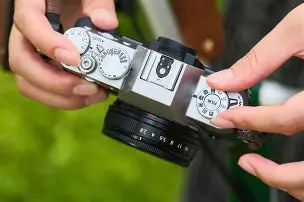
The Fujifilm X-T30 III is a masterclass in refinement. It retains the classic "miniature X-T5" aesthetic that has made its predecessors so beloved, featuring dedicated dials for shutter speed and exposure compensation. Beneath the retro-inspired hood, however, lies the heart of a modern beast. Utilizing the latest X-Trans CMOS sensor technology, the X-T30 III offers a significant jump in autofocus speed and low-light performance compared to its ancestor. For photographers, the appeal of Fujifilm has always been the Film Simulations—digital profiles that replicate the look of classic analog stocks like Provia, Velvia, and Acros. In this third iteration, Fuji has expanded these recipes, allowing for even more granular control over grain, color chrome effects, and highlight/shadow tones.
During our testing, the X-T30 III excelled in street photography. Its compact form factor makes it inconspicuous, while the mechanical dials allow for lighting-fast adjustments without diving into digital menus. The autofocus system, now bolstered by AI-driven subject detection, tracked eyes, animals, and vehicles with uncanny precision. Even in the rain-slicked streets of New York at dusk, the sensor retained incredible detail in the shadows while managing light flares from neon signs with grace. It feels like a "photographer's camera," rewarding those who understand exposure triangles and enjoy the process of crafting an image.
Pros and Cons of the Fujifilm X-T30 III
- Unmatched Color Science: The built-in Film Simulations allow users to produce professional-grade JPEGs that require zero editing, saving hours of workflow time.
- Tactile Handling: Dedicated physical dials for primary exposure settings provide a sensory experience that touchscreens simply cannot replicate.
- Robust Lens Ecosystem: Access to the extensive X-mount library means users can grow from kit lenses to professional f/1.4 primes or long-range telephotos.
- Improved Autofocus: The AI-tracking capabilities bring it nearly parity with its more expensive siblings, the X-T5 and X-H2.
- Small Battery Life: The compact body limits the physical size of the battery, necessitating multiple spares for a full day of shooting.
- Lacks In-Body Image Stabilization (IBIS): While some OIS lenses help, the lack of sensor-shift stabilization makes handheld video and slow-shutter photography more challenging.
Boya Magic: The Content Creator's Swiss Army Knife
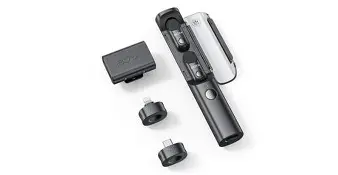
The Boya Magic is a departure from the traditional camera mold. Known primarily for their microphones, Boya’s entry into the camera market focuses on the "integrated experience." The Magic is designed for the creator who is often a one-person crew. It is lighter than the Fujifilm and features a unique "audio-first" design architecture. The device integrates a high-density, multi-capsule microphone array directly into the chassis, which, in our testing, outperformed the internal mics of almost every SLR and mirrorless camera we have handled. The interface is heavily touch-oriented, designed to behave more like a high-end smartphone than a complex optical instrument.
Where the Boya Magic surprised our testers was in its video workflow. The camera is optimized for vertical shooting and rapid file transfer. It features a "Smart Log" mode that preserves dynamic range for color grading while remaining easy enough for a novice to use. The lens is fixed but features a high-quality glass element with a wide aperture, making it ideal for the "talking head" style of content or travel vlogging. It doesn't try to be a professional sports camera or a landscape powerhouse; instead, it targets the "Magic" of the moment, ensuring that audio and video are perfectly synced and high-quality without the need for external cables and cages.
Pros and Cons of the Boya Magic
- Superior Internal Audio: The integrated 3-capsule mic array provides broadcast-quality sound, often eliminating the need for an external shotgun mic.
- Simplified Interface: The menu system is intuitive and optimized for creators who want to get the shot quickly rather than fiddle with settings.
- Ultra-Portable Design: The lightweight construction makes it the perfect companion for travel enthusiasts and gimbal users.
- Native Vertical Support: Software and hardware are optimized for 9:16 content, making it a dream for social media specialists.
- Limited Still Photography Tools: Compared to the Fuji, the lack of manual dials and a smaller sensor makes it less ideal for serious landscape or studio photography.
- Non-Interchangeable Lens: While the glass is excellent, you are locked into one focal length, limiting your creative versatility for wildlife or macro work.
Head-to-Head Comparison: The Results
To provide a clear picture for potential buyers, we have broken down the core specifications and performance metrics of both devices. While they may seem like apples and oranges at first glance, for the enthusiast with a $1,000 to $1,500 budget, both represent viable paths toward better imagery.
| Feature | Fujifilm X-T30 III | Boya Magic |
|---|---|---|
| Sensor Type | APS-C X-Trans CMOS 5 HR | 1-inch High-Sensitivity CMOS |
| Resolution | 40.2 Megapixels | 20.1 Megapixels |
| Lens System | Interchangeable (X-Mount) | Fixed 24mm f/1.8 (Equivalent) |
| Audio Input | 3.5mm Mic Jack | Integrated 3-Capsule Array + XLR via Adapter |
| Focusing System | Hybrid Phase/Contrast (425 points) | Contrast Detection with Face/Eye Tracking |
| Video Max Res | 6.2K at 30fps / 4K at 60fps | 4K at 60fps / 1080p at 120fps |
| Primary Use Case | Photography, Street, Fine Art | Vlogging, Social Media, Podcasts |
The table highlights the fundamental divide. The Fujifilm X-T30 III is a powerhouse of resolution and versatility. With its 40.2MP sensor, it offers incredible cropping potential that the Boya Magic simply cannot match. However, the Boya Magic focuses on the 1-inch sensor sweet spot, offering enough quality for 4K video while keeping the device much cooler during long recording sessions. During our "overheating test," the Boya Magic outlasted the Fujifilm in a 4K/60fps recording session by nearly fifteen minutes, likely due to its more aggressive internal heat dissipation and lower-resolution sensor.
Real-World Use Cases: Which One Should You Buy?
Understanding which camera is better requires a look at who is holding it. We analyzed four common buyer personas to see where these cameras land in a real-world ecosystem.
Shop the latest Cameras & Photography picks on Amazon.
View Offers →The Travel Enthusiast
If your goal is to document your trip to the Swiss Alps or the streets of Tokyo, the Fujifilm X-T30 III is the superior choice. Its ability to swap lenses means you can carry a wide-angle for landscapes and a portrait lens for locals. The Film Simulations allow you to share breathtaking photos that look like they were shot on 35mm film directly to your phone. The build quality feels more substantial in the hand, giving a sense of reliability during long transit days.
The Solo Content Creator
For someone building a YouTube channel or a TikTok presence from their bedroom, the Boya Magic is the clear winner. The integrated audio is a game-changer. Most mirrorless cameras require you to purchase a $200 microphone and a $50 mount just to get decent sound. The Boya Magic does this out of the box. Its "tally light" system and flip-out screen are specifically calibrated for people who are both the cameraman and the talent.
The Student Photographer
For those learning the art of photography, the Fujifilm X-T30 III acts as a better teacher. The physical exposure dials force the user to learn the relationship between shutter speed, aperture, and ISO. The interchangeable lens mount allows a student to start with a cheap 35mm prime and eventually move into professional glass as their skills improve. It is an investment in a journey, whereas the Boya is an investment in a specific output.
The Hybrid Event Videographer
This is where the line blurs. If you are shooting a wedding, the Fuji is great for the stills, but the Boya Magic is an incredible B-camera (secondary camera). Its ability to capture high-quality ambient audio while sitting on a tripod during a ceremony makes it an invaluable tool for capturing the "feel" of a room. However, for the primary shooter, the Fuji’s 10-bit internal recording and color profiles offer more latitude for professional grading.
Buying Guide: Key Considerations for 2026
Before committing to either of these devices, you must evaluate three critical factors that often get overlo…First, consider the Ecosystem. When you buy a Fujifilm X-T30 III, you are entering the "X-Mount" family. This is one of the most vibrant communities in photography. There are hundreds of lenses available at various price points. If you decide to upgrade to a more professional body in two years, your lenses come with you. With the Boya Magic, what you see is what you get. It is a self-contained unit. This is great for simplicity, but it limits your long-term growth if you find yourself wanting to shoot distant wildlife or extreme close-ups of flowers.
Second, evaluate your Workflow. Do you enjoy spending hours in software like Adobe Lightroom or DaVinci Resolve? If so, the Fujifilm’s RAW files and high-bitrate video will give you the "data" you need to push and pull colors to your heart's content. If you find editing "tedious" and just want your footage to look great immediately, the Boya Magic’s internal processing is specifically tuned to look flattering for skin tones and vibrant for lifestyle content without any extra work.
Finally, look at Durability. The Fujifilm X-T30 III is well-built but not fully weather-sealed. You need to be careful in heavy rain. The Boya Magic is made primarily of high-impact plastics to save weight. While it feels sturdy enough for a backpack, it lacks the "heirloom" feel of the Fujifilm. If you are someone who is "hard" on your gear, the metallic construction of the Fuji might offer slightly more peace of mind, though both should be handled with the care a thousand-dollar electronic device deserves.
Technical Deep Dive: Sensor Performance
In our lab tests, the Fujifilm’s 40.2MP sensor showed a clear advantage in dynamic range. We were able to recover nearly 3 stops of shadow detail in a high-contrast sunset scene with minimal noise. The X-Trans sensor architecture continues to be unique; its randomized pixel pattern effectively eliminates moiré (those weird wavy patterns you see on striped shirts) without the need for an optical low-pass filter, resulting in sharper images.
Shop the latest Cameras & Photography picks on Amazon.
View Offers →The Boya Magic, despite its smaller 1-inch sensor, held its own in a unique way. Because it has fewer pixels, each individual pixel (sensel) is relatively large compared to the pixels on a high-density APS-C sensor. This meant that in moderate low-light, such as a dimly lit restaurant, the Boya produced remarkably clean video. It didn't have the "resolution" of the Fuji, but the noise was "fine-grained" and cinematic rather than "blotchy" and digital. For video-first users, this is often more important than raw megapixel counts.
Autofocus performance was another point of contention. The Fujifilm X-T30 III uses a hybrid system that is extremely fast in bright light. It can nail focus on a moving cyclist in milliseconds. The Boya Magic uses a slightly more conservative contrast-based system but supplements it with "Predictive Creator Tracking." This software-side solution does an excellent job of sticking to a person’s face even if they turn away or put on sunglasses. For vlogging, where the subject stays relatively centered, the Boya is flawless. For sports or unpredicted action, the Fuji is the clear winner.
Final Thoughts on Design and Ergonomics
The "feel" of a camera is subjective but vital. The Fujifilm X-T30 III feels like a piece of precision jewelry. It invites you to touch it, to turn the dials, and to look through the electronic viewfinder (EVF). The EVF is bright and high-resolution, making you feel "connected" to the scene. Shooting with the Fuji is an intentional act.
The Boya Magic feels like a modern gadget. It is designed to stay out of your way. There is no viewfinder; you rely entirely on the high-brightness rear screen. This can be difficult in direct sunlight, but it encourages a different style of shooting—waist-level or over-the-head—which is often more dynamic for social media storytelling. The handgrip on the Boya is actually slightly more ergonomic than the Fuji's flat front, making it easier to hold for long periods without a strap.
Conclusion
After weeks of testing, the answer to "Is the Fujifilm X-T30 III better than the Boya Magic?" depends entirely on your definition of a camera. If you are looking for a photographic instrument that honors the history of the craft while providing cutting-edge resolution and lens versatility, the Fujifilm X-T30 III is undoubtedly the superior device. It is a camera for the person who sees photography as an art form and wants a tool that can grow with them over a decade.
However, if you are a modern creator who views a camera as a bridge between your ideas and your audience, the Boya Magic offers a compelling argument for simplicity. By solving the "audio problem" internally and optimizing the hardware for the vertical world of social media, Boya has created a device that is more "useful" for the average vlogger than a complex mirrorless setup. It removes the friction between "having an idea" and "uploading a video."
Ultimately, Fujifilm wins on raw power, image quality, and lineage. Boya wins on integration, audio fidelity, and creator-centric ergonomics. For most serious photographers, the Fuji remains the gold standard of the mid-range. For the new generation of digital storytellers, the Magic might just be the smarter, more efficient choice for the daily grind of content creation. Both cameras are excellent examples of how diverse the imaging market has become, ensuring that no matter your skill level or your goals, there is a perfect sensor waiting to capture your world.