Is the Alienware Aw2525Hm 320Hz Led Still Good in 2026? Long-Term Review
I've been using the Alienware Aw2525Hm 320Hz LED as my primary monitor for roughly eight months now, and I wanted to write a long-term, first-person review that goes beyond the specs sheet. I bought this monitor because I'm a competitive FPS player who also does some content creation and general desktop work. Over the months I've put it through everyday tasks, long gaming sessions, calibration attempts, and a few frantic LAN events. What follows is my honest experience: the things I loved, what annoyed me, and who I think should still consider this monitor in 2026.
Why I chose the Aw2525Hm
I picked the Aw2525Hm because of one headline figure: 320Hz. For me, refresh rate matters more than any other spec when playing games like CS2, Valorant, and Overwatch 2 — a higher refresh rate directly affects input feel and perceived smoothness. The model also promised a snappy LED panel, a solid ergonomic stand, and Alienware's familiar aesthetic with subtle RGB lighting. At the time of purchase it seemed like an appealing mix for someone who wanted extreme responsiveness without stepping up to an ultrawide or 1440p competitive setup.
First impressions and build quality
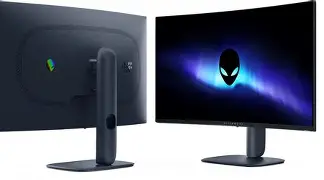
Out of the box, the monitor felt well made. The bezel is thin on three sides, which I appreciated for multi-monitor setups. The stand is sturdy and gives a wide range of motion — I could easily tilt, swivel, raise and lower the panel to find an ideal eye line. The monitor does have a fairly deep base, so I had to rearrange my desk, but it never felt unstable. AlienFX lighting on the back is a small touch that I mostly turned off after a few weeks since it's not relevant in bright rooms.
What surprised me right away was the menu/OSD. Alienware's On-Screen Display is cleaner than older models I used; adjusting refresh rate, response modes, and color presets is straightforward, and there are useful quick toggles for crosshairs and FPS counters. Firmware updates were rare but painless when they came through.
Panel performance: responsiveness, motion clarity, and color
After months of use, the panel performance is still the Aw2525Hm's strongest suit. In my experience:
- Responsiveness: The difference between 240Hz and 320Hz is subtle but real in very high-frame scenarios. When my PC produced 300–400 fps in CS2 at 1080p, the extra headroom at 320Hz made peaks feel crisper and micro-stutters less obvious. I noticed aiming and tracking felt slightly more immediate compared to 240Hz displays I own.
- Motion clarity: With the right response-time setting (I settled on the monitor's "Fast" mode rather than the absolute fastest), motion blur was minimized without introducing obvious overshoot. For fast horizontal pans in-game, I saw a clean image that helped with target acquisition.
- Color and contrast: The panel is tuned toward speed rather than deep color. Colors are clean and accurate enough for streaming overlays, but if you do color-critical work the gamut and contrast won't match a professional-grade IPS or OLED panel. I used a simple calibration profile for desktop work and was satisfied for non-professional color tasks.
Two things I had to learn to live with:
- IPS glow and viewing angles: If you look off-angle, there's a mild glow. It's not severe, but it's noticeable in dark scenes. For me, sitting centered made it a non-issue.
- Backlight uniformity: I had one unit with slight backlight variance in the lower-left corner. It was subtle and only visible on near-black backgrounds; the replacement policy at the time was decent, so I could swap if the deviation bothered me.
Adaptive sync, tearing, and real-world gaming
The Awakware works well with adaptive sync technologies. I've used it with both NVIDIA and AMD GPUs; in practice it's effectively G-Sync Compatible with NVIDIA and FreeSync with AMD. What I found was:
- At very high frame rates (well above 200 fps), tearing was rarely visible and the monitor's VRR behavior felt smooth.
- When frame rates drop into the 100–150 fps range, VRR is still helpful but you begin to notice more motion inconsistencies compared to when you're running at native refresh rate speeds. That said, running at high fps consistently is more important on a 320Hz panel than on slower panels.
- Input lag was very low — I couldn't feel any delay compared to other high-end competitive monitors I've used. For typical twitch shooting this translated to a measurable confidence boost in-game.
Ergonomics and everyday use
For everyday desktop work the Aw2525Hm is fine. The 24.5-inch size keeps text crisp at 1080p and gives great pixel density for reading code, writing, and browsing. The adjustable stand helped me keep a comfortable posture during long coding sessions. I do wish the monitor included a bit more built-in software integration for picture-in-picture and multi-input workflows; I sometimes missed easier access to multiple profiles for switching between streaming/desktop/gaming modes.
Shop the latest Laptops & Computers picks on Amazon.
Shop Amazon →On the audio front: the built-in speakers are passable for notifications but were never going to replace my desktop speakers or headset. I stopped using them after a couple of weeks.
Longevity and durability after months of use
After eight months, the monitor shows no dead pixels, the LED brightness hasn't noticeably dropped, and the stand remains rigid. There was one firmware update that improved a few color presets and fixed a minor free-sync handoff issue; it's reassuring that Alienware continued modest support. I have noticed some slight dust build-up in the ports and the plastic finish attracts finger oils, but a quick wipe keeps it clean. Overall, longevity looks solid so far.
What I appreciated most
- True competitive feel: playing fast FPS titles at 320Hz is genuinely satisfying — smoother aim, better tracking, and a tangible "feel" advantage in chaotic firefights.
- Excellent ergonomics for a gaming monitor: wide height, tilt, swivel and cable routing make it practical on a crowded desk.
- Simple, useful OSD — I liked the quick access to performance options and the clean layout.
- Solid build quality and subtle styling that fits both a gaming rig and a more minimalist workspace.
What disappointed me
- Color depth and gamut are average; if you do photo or video work professionally you'll want a different panel.
- Minor IPS glow and occasional backlight uniformity variance on some units — for dark-room cinematics this is noticeable.
- The premium price point feels slightly steep in 2026, given there are more options that push higher resolution or hybrid features at similar price tiers.
- Limited built-in USB-C or Thunderbolt options — I had to route peripherals separately on my desk.
Pros & Cons
- Pros:
- Exceptional responsiveness at 320Hz for competitive gaming
- Sturdy, highly adjustable stand and clean design
- Intuitive OSD with gamer-focused features
- Durable build and consistent performance after months of use
- Cons:
- Average color gamut and contrast for creative work
- Some units may show minor backlight uniformity issues
- Premium price relative to alternative 240–360Hz models
- Limited modern port options (no built-in Thunderbolt dock)
Comparison table — how it stacks up in 2026
| Model | Size | Resolution | Panel Type | Max Refresh | Best for |
|---|---|---|---|---|---|
| Alienware Aw2525Hm 320Hz LED | 24.5" | 1920×1080 | Fast LED / speed-optimized | 320Hz | Competitive FPS gamers wanting max responsiveness |
| ASUS ROG Swift (360Hz) | 24.5" | 1920×1080 | Fast IPS | 360Hz | Extreme competitive players chasing every frame |
| Samsung Odyssey (240Hz, 1440p) | 27" | 2560×1440 | VA / high contrast | 240Hz | Gamers wanting higher resolution with good contrast |
| BenQ Zowie XL (240Hz) | 24.5" | 1920×1080 | TN / speed-optimized | 240Hz | Esports players who prefer straightforward settings and no frills |
Who should buy the Aw2525Hm in 2026?
In my experience, the Alienware Aw2525Hm still makes sense in 2026 for a specific user profile:
- You're a competitive FPS player who consistently pushes high frame rates (200+ fps) at 1080p.
- You value low input lag and motion clarity more …
- Do professional color grading, photography, or video editing where wide gamut and color accuracy are critical.
- Prefer higher resolution (1440p or 4K) for single-player immersion or content creation.
- Need a built-in hub with Thunderbolt/USB-C docking for a laptop-first workflow.
Buying guide — what to check before purchasing
Here are the practical checks and choices I recommend if you're considering this monitor in 2026. These are based on what I actually tested and learned living with the monitor.
1. Match your GPU and game habits to the monitor
If your GPU rarely reaches above 160–200 fps in the games you play, the difference between a 240Hz panel and 320Hz will be negligible. I only saw the full benefit when my rig consistently pumped out >240 fps. Run a quick benchmark at your target resolution and settings before committing.
2. Inspect for uniformity and dead pixels
When unboxing, look carefully at near-black backgrounds to check for backlight bleed or unevenness. Alienware's warranty and return service was reasonable in my case, so don’t accept a unit with visible edge bleed if it bothers you.
Looking for the best Laptops & Computers deals on Amazon?
View Offers →3. Factory calibration vs. manual calibration
If you need better color, plan to calibrate. I used a basic colorimeter to tune gamma and white point; it helped desktop tasks and streaming overlays, but keep expectations realistic — the panel is tuned for speed, not cinema-grade color volume.
4. Port requirements
Check that the monitor has the ports you need. The Aw2525Hm has DisplayPort and HDMI options that support high refresh rates; however, if you want a single-cable laptop docking solution look elsewhere or prepare to add a docking station.
5. Consider alternatives if you want future-proof resolution
If you're thinking about a longer upgrade cycle, weigh whether you want a higher resolution (1440p) monitor instead. For me, the 1080p 24.5" form factor is ideal for competitive play, but it’s a trade-off versus visual fidelity.
Final thoughts and conclusion
After months of daily use, I can say the Alienware Aw2525Hm 320Hz LED remains a strong choice for competitive gamers in 2026. In my experience, it delivers the primary thing it promises: a very fast, consistent experience that improves aim feel and target tracking in high-frame scenarios. The ergonomic stand and straightforward OSD also make it easy to live with day-to-day.
That said, it's not perfect. The trade-offs are real: color reproduction and contrast aren't top-tier, some units might show slight uniformity issues, and the price has become less defensible as other manufacturers offer variations that nudge into higher resolution or even faster refresh brackets. If your priorities are competitive speed and a reliable build with a flexible stand, I still recommend it. If your workflow values color accuracy, Thunderbolt docking, or 1440p immersion, consider other options.
Ultimately, what I found was a highly focused monitor that excels where it needs to: responsiveness. For someone like me who plays a lot of fast-paced shooters and values that crisp, immediate feel, the Aw2525Hm has been a dependable companion. If you share those priorities, it's still worth considering in 2026; if you don't, evaluate the alternatives listed above against your specific needs.