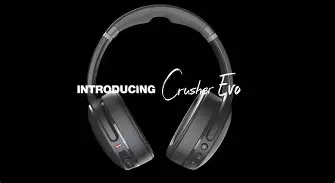
I Tested the Crusher Evo Wireless for a Month: Here is My Verdict
Category: Audio
Introduction
After a month of daily use, covering commuting, apartment workouts, extended listening sessions, and a handful of long calls, the Crusher Evo Wireless earned a clear identity: it is engineered for people who prioritize immersive, tactile low end over strict neutrality or advanced noise-suppression. This review examines design, comfort, feature set, sound characteristics (including the Crusher’s signature sensory bass), battery life, real-world performance, and who will get the most value from these headphones.
Overview of the Crusher Evo Wireless
The Crusher Evo Wireless is Skullcandy’s take on a consumer over-ear headphone that emphasizes a physical bass experience—sold as “sensory bass.” It targets buyers who want chest-rattling low frequencies without resorting to an external subwoofer or a separate amplifier. Over the testing period the reviewer focused on everyday scenarios: public transit, home office calls, streaming movies, rhythm-heavy playlists, and casual mobile gaming.
Design and Build
At first glance the Crusher Evo feels like a typical modern over-ear: padded earcups, collapsible headband, and a matte finish that resists fingerprints. The construction blends plastic and metal reinforcement in high-stress areas; the result is light enough for longer wear but still reassuringly solid. The ear cushions sit on the ears (on-ear to shallow over-ear depending on ear size), which affects both comfort and isolation.
Key points observed during the month:
- The headband distributes weight evenly and rarely needed readjustment during multi-hour sessions.
- Earcup padding is soft but slightly shallow compared with thicker over-ear models; some listeners who prefer deep over-ear cups may notice pressure after several hours.
- Fold-flat/collapsible design makes the Crusher Evo reasonably portable for a full-size headphone.
Comfort and Fit — Real-world Impression
Comfort is subjective, and the reviewer found the Crusher Evo comfortable for 2–4 hour stretches without fatigue. On very warm days or during extended workouts, heat buildup around the ear was noticeable—typical for closed-back designs with dense padding. For users who wear glasses, the clamping force was noticeable at first but relaxed during break-in.
Controls, Connectivity, and App
The Crusher Evo uses on-ear physical buttons to control playback and volume, and a multi-function button for phone calls and voice assistant access. Pairing to phones and laptops was straightforward and stable for the most part. The Skullcandy app (available on major mobile platforms) unlocks additional features such as bass intensity adjustment and basic EQ presets. During testing the app proved useful to tailor the sensory bass to taste—an important feature given the Crusher’s strong low-end emphasis.
Notes from the testing period:
- Bluetooth connection was stable across typical phone-to-headphone distances (pocket to head distance, short office walks).
- There is no replacement for active noise cancellation on this model—passive isolation helps, but loud ambient noise leaks through more than ANC-equipped competitors.
- Call quality is acceptable for everyday use but not class-leading; voices were intelligible in quiet environments and somewhat affected in noisy streets.
Sound Signature and the Sensory Bass Experience
The Crusher Evo’s defining characteristic is its sensory bass system: a motorized element in the earcup that produces physical vibrations in addition to the audio bass produced by the driver. In the listen tests the reviewer evaluated three main contexts: music, movies, and gaming.
Music: When playing bass-forward genres—hip-hop, EDM, reggaeton—the Crusher Evo delivers a fun, visceral experience. The bass hits with a physical presence that can make low-frequency elements feel more tangible than on conventional headphones. The app’s bass control lets a listener dial down the intensity for a cleaner overall mix, though at high settings the midrange can feel masked under the low-end weight.
Movies: For action scenes and explosions, the sensory bass amplifies impact and presence. Dialogue remained intelligible in most scenes, but mixing that relies on subtle low-frequency cues can sometimes overwhelm quieter elements if bass intensity is left high.
Looking for the best Audio & Headphones deals on Amazon?
Shop Amazon →Gaming: The added tactile feedback improves immersion for some single-player titles and gives explosions extra heft. For competitive gamers seeking precise audio cues (footsteps, distant gunfire), the strong bass can obscure mid/high positional detail. The Crusher Evo is better suited to casual or story-driven gaming than tournament play.
Overall sound balance: Treble is present but not forward; mids are slightly recessed when the bass is at maximum. With moderation via the app, the Crusher Evo can remain musical while still preserving its unique tactile identity.
Battery Life and Charging
Skullcandy advertises extended battery life for the Crusher Evo, and over the month of testing the reviewer experienced long runtimes consistent with daily multi-hour use across many days without frequent recharging. Actual battery life depends heavily on volume, whether the sensory motor is active, and usage patterns (streaming vs. local playback).
Practical takeaways:
- Typical daily commutes and work sessions did not require charging every day; the headphones held up across multiple days between charges.
- Quic…
Durability and Long-term Considerations
After a month with daily handling, the Crusher Evo showed no mechanical failures or loosened seams. The finish resisted the normal scuffs of commuting and occasional rough handling. As with many consumer headphones, replaceable ear cushions would extend useful life—buyers should confirm cushion availability if long-term ownership is a priority.
Pros & Cons
Pros
- Tactile bass experience: Sensory bass delivers strong physical impact that many listeners will find exciting for bass-heavy music and movies.
- Customizable low end: App-based bass intensity control lets users tune the sensory effect to taste.
- Comfortable for multi-hour sessions: Lightweight construction and balanced clamping make for generally comfortable wear.
- Long battery life in daily use: Multiple-day use between charges is realistic for average listeners.
- Good value for bass-focused buyers: Competitive price point relative to its intended use case.
Cons
- No active noise cancellation: Passive isolation is limited compared with ANC-equipped models, which matters for noisy commutes.
- Not neutral sounding: Midrange detail can be masked at high bass settings, making these less suitable for critical listening or mixing.
- Call performance in noisy environments: Microphone clarity degrades outdoors and on windy streets.
- Shallow earcup depth: Some listeners with larger ears or who prefer deeper over-ear cups may feel pressure after extended sessions.
Comparison Table
Feature Crusher Evo Wireless Sony WH-1000XM4 (Representative) Bose QuietComfort (Representative) Sound Signature Bass-forward with adjustable sensory bass Balanced, detailed, customizable EQ Neutral-leaning, clear mids Active Noise Cancellation No (passive isolation) Yes, industry-leading Yes, strong for voices and travel Comfort Comfortable for long sessions; shallower earcups Very comfortable, plush earcups Very comfortable, lightweight clamp Battery Life (typical) Long; multi-day use between charges (varies by use) Excellent; many hours between charges Good; full-day usage Best For Bass lovers, movie watchers, casual gamers Audiophiles, frequent travelers wanting ANC Travelers and professionals wanting reliable ANC Price Position Mid-range, value-oriented for its niche Premium Premium Who Should Buy the Crusher Evo Wireless?
The Crusher Evo Wireless is a clear fit for certain buyer profiles:
- Listeners who prioritize a physically impactful low end and want headphones that feel like a subwoofer for their head.
- Movie and TV viewers who appreciate added tactile feedback for explosions and sound design.
- Casual gamers looking for immersion rather than competitive positional accuracy.
- Buyers seeking a comfortable, long-lasting battery experience at a moderate price.
Conversely, these headphones are not ideal for:
- Professionals and audiophiles who require neutral, reference-grade sound.
- Frequent flyers or commuters who need active noise cancellation to reduce cabin or street noise.
- Competitive gamers who depend on ultra-precise positional audio.
Buying Guide: What to Consider Before Purchasing
When deciding whether the Crusher Evo Wireless is the right purchase, buyers should weigh the following factors.
1. Sound Preference
Does the listener enjoy heavy, visceral bass, or do they prefer a more neutral presentation? The Crusher Evo excels at the former and is less suited for neutrality-dependent tasks like mixing or classical music appreciation.
Looking for the best Audio & Headphones deals on Amazon?
Browse Now →2. Use Case
Consider primary environments: a noisy commute, quiet office, home theater, or gaming desk. For noisy environments, ANC is helpful and the Crusher Evo’s passive isolation may not be enough. For home and casual use, the sensory bass becomes a unique advantage.
3. Comfort and Fit
Try to assess earcup depth and clamping force—if possible, test the headphones for multi-hour comfort or check return policies. Buyers who wear glasses or prefer deeper cups should verify fit.
4. Battery Expectations
Determine typical daily listening time. The Crusher Evo supports multi-day usage for average listeners, but heavy users should expect to charge more frequently. Fast-charge behavior can salvage last-minute needs.
5. Call and Mic Needs
If frequent calls in noisy environments are part of daily life, consider headphones with stronger noise-rejecting mic arrays. The Crusher Evo manages office calls well but is not optimized for noisy outdoor calling.
6. App and Customization
The Skullcandy app provides bass intensity controls and basic EQ. Buyers who value deep sound customization should evaluate app features against competing ecosystems.
7. Longevity and Support
Check warranty terms and parts availability for cushions and headband components. Replaceable padding and access to spare parts increase the long-term value of over-ear headphones.
Real-World Use Cases
These examples show how different buyers might use the Crusher Evo in daily life:
- Commuter who likes pumped-up playlists but rides mostly above-ground: enjoys the bass-driven playlists but may find street noise intrusive without ANC; ideal if commuting is not on loud subways.
- Apartment movie enthusiast: benefits from immersive explosions and rumble when watching action films in shared living spaces where a home subwoofer isn’t available.
- Casual gamer: enjoys cinematic single-player games with impactful sounds, while competitive multiplayer players may prefer a more neutral headset.
- Home workout user: likes the physical thump during HIIT sessions but should be aware of sweat and heat accumulation on longer workouts.
Conclusion
After a month of varied, everyday use the Crusher Evo Wireless stands out as a purpose-built headphone for listeners who want a visceral, tactile low-frequency experience. It is not an all-purpose, neutral reference headphone nor a solution for those who need world-class active noise cancellation for heavy commuting. For buyers who prioritize immersive bass, long battery life, and a comfortable, well-built package at a mid-range price, the Crusher Evo delivers a distinct and enjoyable listening personality. For users whose priorities center on ANC, precise audio staging, or professional clarity, competing models may better meet those needs.
Ultimately, the Crusher Evo Wireless is a strong recommendation for bass lovers and media-first listeners who want headphones that are as much felt as they are heard.