Glorious Model I 2 Honest Review — Is the Hype Justified?
Introduction: Why I Ended Up Buying the Model I 2
I didn’t buy the Glorious Model I 2 because I needed another mouse. I bought it because I kept bouncing between two extremes: lightweight FPS mice that felt great for aim but gave me zero productivity features, and chunky “MMO” mice that had the buttons I wanted but made my hand tired after long sessions.
I’d been looking for a “do-it-all” option—something light enough that it wouldn’t punish my wrist in fast shooters, but with enough side buttons that I could actually map useful stuff (push-to-talk, weapon swaps, Discord mute, browser back/forward, media controls, and a couple macros for work). The Model I 2 looked like it was made for that exact gap: ergonomic shape, a bunch of thumb controls, and modern specs on paper.
I’ve been using the Model I 2 for several months now—gaming most nights, plus everyday work use. I’ve traveled with it, packed it in a bag, cleaned it, remapped it, and tried hard to make it my “one mouse.” This is my honest owner review: what impressed me, what annoyed me, what I think the hype gets right, and what I think is oversold.
Quick Context: How I Tested It (and What I Care About)
Before getting into the details, here’s the context that shapes my opinion:
- Games: Mostly FPS (twitch aim + tracking), plus some action games and a little MMO-style hotbar usage.
- Work: Heavy browser use, spreadsheets, writing, and a lot of window switching.
- Grip styles: I naturally alternate between claw and a relaxed palm grip depending on what I’m doing.
- Priorities: Comfort over long sessions, reliable wireless (if applicable), side button usability, and scroll wheel feel. I’m picky about mushy clicks and wobbly wheels.
Design and Build: The First Week Impression vs. Month Three Reality
Shape and Comfort
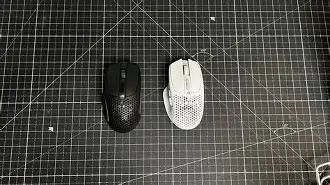
What sold me instantly was the shape. In my hand, the Model I 2 sits in that sweet spot: it’s ergonomic without feeling like a massive “palm-only” shell, and it encourages a stable thumb position for the side controls. I noticed within the first few days that my hand relaxed more compared to flatter ambidextrous mice. That mattered more than I expected—especially in longer gaming sessions where tension builds without me realizing it.
After a few months, the comfort stayed consistent. I didn’t develop any “hot spots” or pressure points, which is usually where a mouse loses me long-term. The right-side support and overall contour worked well for me, and I didn’t feel like I had to constantly readjust my grip.
Weight and Balance
One thing I appreciated is that it doesn’t feel like a traditional button-heavy mouse. In my experience, mice with extra side controls often feel front-heavy or just generally bulky. The Model I 2 felt surprisingly nimble, and the weight distribution was good enough that quick flicks didn’t feel like I was swinging a brick. It still doesn’t feel like the absolute lightest esports-oriented mouse, but it also doesn’t feel like it’s fighting you.
What I found was that the balance mattered more than the raw number. It stays controllable during micro-adjustments, and it doesn’t wobble or feel hollow when I lift it.
Materials and Long-Term Wear
This is where I got a little more mixed over time. The surface texture felt great early on—grippy without being rubbery. Over months of use, I noticed slight “polishing” in my usual contact areas, especially where my palm and thumb rest. It didn’t suddenly become slippery, but the feel did change a bit, the way many matte plastics do with skin oils and constant friction.
I also learned pretty quickly that if you snack while gaming (I try not to, but I’m human), any textured crevice can collect grime. Cleaning it wasn’t hard, but it’s the kind of mouse you’ll actually want to wipe down occasionally if you care about how it looks and feels.
Buttons and Controls: The Best Part (and Also the Part with the Most Caveats)
Main Clicks (Left/Right)
The main clicks were satisfying out of the box: crisp, responsive, and not overly stiff. After testing for months, I’d say they remained consistent. I didn’t get the “click fatigue” I sometimes get from overly heavy switches, and I didn’t notice any scary double-click behavior during my use.
What I liked most was how predictable the actuation felt during rapid firing. In shooters, my finger never felt like it was fighting the click or sinking into a mushy press.
The Side Button Layout: Practical, Not Just “More Buttons”
The Model I 2’s biggest selling point is the side controls, and I have to give it credit: the layout is thoughtfully done. I’ve used mice where side buttons are technically present but practically useless because they’re cramped, identical, or placed where your thumb can’t reliably differentiate them under pressure.
Here, I could actually build muscle memory. After a couple weeks, I stopped thinking about which button was which. I mapped:
- Forward/back: Browser navigation and in-game quick actions
- Push-to-talk: A dedicated thumb button that I could hit without shifting grip
- Mute/deafen toggles: For voice chat management
- Two work shortcuts: Window switching and a copy/paste helper macro
And the big thing: I could press these without accidental misclicks most of the time. That “most of the time” matters, though.
Looking for the best Laptops & Computers deals on Amazon?
Browse Now →My Real Complaint: Occasional Side Button Misfires Under Stress
One thing that bothered me is that when I’m really locked in—tense aim duels, tight angles, adrenaline up—I sometimes press the wrong side button. Not constantly, and not enough to make it unusable, but enough that I noticed it and had to adapt my mappings.
In practice, I fixed this by assigning “high consequence” actions (like melee or grenade) to the most distinct, easiest-to-hit side control, and moving lower-risk functions (like ping or utility) to the ones more likely to be mis-tapped. Once I did that, it became much less of an issue.
So yes, the extra buttons are genuinely useful—but you still need to be smart about what you bind where.
Scroll Wheel: Good Feel, But I’m Picky
The scroll wheel feel is solid: steps are defined enough for weapon cycling and general browsing, and it doesn’t feel loose. What I noticed over time is that I personally prefer a slightly tighter, more tactile wheel for certain games, while for productivity I like smoother scrolling. The Model I 2 sits in the middle.
I didn’t have reliability issues with the wheel during my months of use, but I’ll say this: if you are extremely sensitive to wheel “character,” you should know it’s not ultra-premium-feeling like some flagship mice. It’s good, functional, and consistent—just not a “wow” feature for me.
Sensor and Performance: Where the Hype Mostly Holds Up
In day-to-day use and gaming, the tracking felt excellent. I’m not going to pretend I can “feel” every technical spec, but I can absolutely feel when a mouse is inconsistent, when it spins out, or when micro-corrections feel jittery. I didn’t get any of that here.
After testing for months across different pads and surfaces, I found the sensor behavior to be reliable: no random dropouts, no weird acceleration feeling, and …
Where performance mattered most to me was in small aim corrections—tracking targets, holding a pixel angle, and doing fast flicks. The Model I 2 kept up, and it never felt like the side-button design came at the cost of gaming competence.
Software and Customization: Powerful, But Not “Set It and Forget It”
I spent more time in the software than I expected. Not because it’s mandatory, but because once you have that many programmable controls, you start iterating. I went through a few weeks of “this mapping is perfect” followed by “actually, I hate that mapping.”
The good news: customizing profiles and bindings is the core strength of this mouse. I was able to create setups for:
- Work profile: Navigation, window management, copy/paste macros
- FPS profile: Push-to-talk, utility, weapon swaps
- Everything else: General browsing and media controls
The less good news: I found the overall experience to be a little “tinkery.” If you enjoy dialing in your setup, you’ll love it. If you want a mouse where you never open software, you’re not getting the main value proposition.
Battery and Daily Practicality: The Stuff You Only Learn After Weeks
Battery life (or power management) is one of those things that sounds boring until it ruins your night. Over months of use, I learned my routine with the Model I 2 and stopped thinking about it. That’s a compliment.
What I noticed is that it fit into my life without drama: I could use it for long stretches, and when I did need to recharge, it wasn’t a “why is it dead again?” situation. I’m not going to give a lab-measured number because my usage varies wildly, but in real life it felt dependable enough that I didn’t worry about it during normal weeks.
I also appreciated that it didn’t feel fragile when I tossed it into a bag. It’s not a tank, but it didn’t give me that “this will creak if I squeeze it” anxiety either.
Looking for the best Laptops & Computers deals on Amazon?
See Deals →How It Fits in a Laptop-Centric Setup (Why This Is in the Laptops Category)
I use my laptop as my main machine a lot of the time—either docked at home or carried around for work. The Model I 2 ended up being one of the few “gaming-leaning” mice that genuinely improved my laptop workflow.
Here’s what I mean:
- Extra buttons = fewer trackpad gestures: On a laptop, I’m constantly switching windows, navigating browser history, and juggling tabs. Mapping these to the thumb buttons made my workflow smoother.
- Ergonomics matter more on the go: When I’m not at my perfect desk height, a comfortable mouse shape becomes more important. I found the Model I 2 easier on my hand than flatter shapes during travel setups.
- One-device simplicity: Instead of packing a “work mouse” and a “game mouse,” I could use this for both without feeling like I was compromising too much.
If you’re a laptop user who games at night, this mouse makes a lot of sense—especially if you want macros and navigation without carrying a full-size productivity mouse.
Pros & Cons (From My Months of Use)
Pros
- Comfortable ergonomic shape that held up over long sessions
- Side buttons are actually usable once muscle memory kicks in
- Performance felt consistent in FPS and general gaming—no tracking weirdness
- Great “one mouse” potential for laptop users who mix work and play
- Customization encourages better workflows (profiles, shortcuts, macros)
Cons
- I occasionally mis-pressed a side button during tense moments until I adjusted my bindings
- Surface texture changed slightly over time in high-contact areas (minor “polishing”)
- Scroll wheel is good but not premium-feeling if you’re extremely picky
- You’ll likely spend time tweaking settings to get the best experience
Comparison: Where the Model I 2 Sits vs. Other Mouse Types
I don’t think the Model I 2 replaces every type of mouse for every person. I think it occupies a very specific middle ground. Here’s how I’d summarize it compared to the alternatives I’ve used and considered.
| Category | Typical Strengths | Typical Weaknesses | How the Model I 2 Compared (My Experience) |
|---|---|---|---|
| Ultra-light FPS mouse | Fast aim, minimal weight, simple layout | Limited buttons, less productivity utility | Not quite as “pure FPS” minimal, but close enough in feel that I still performed well while gaining useful controls. |
| MMO / many-button mouse | Maximum macros and hotkeys | Often heavy and harder to aim with | Fewer buttons than a full MMO grid, but dramatically easier to aim with and more comfortable for mixed use. |
| Office productivity mouse | Comfort, navigation, sometimes smooth scrolling | Not tuned for gaming, often heavier | More game-capable than most productivity mice while still giving me the shortcuts I wanted for laptop work. |
| Budget “all-rounder” mouse | Affordable, decent basics | Often inconsistent clicks/sensor or weak software | Felt more refined and reliable in performance; the real differentiator was the usable side controls and customization. |
Buying Guide: Who I Think Should (and Shouldn’t) Get the Model I 2
Buy It If You’re Like Me and Want One Mouse for Laptop Work + Gaming
If your daily routine is half productivity and half gaming, the Model I 2 makes a lot of sense. I was surprised by how much the side buttons improved normal laptop life—especially browser navigation, push-to-talk, and quick window management. It’s one of the few times I’ve felt like gaming-oriented hardware genuinely helped my work habits.
Buy It If You Use Thumb Buttons Constantly (and Hate Cramped Layouts)
The side controls are the headline feature, and in my experience they’re laid out in a way that encourages real muscle memory. If you’re the kind of person who always wants back/forward and at least two extra actions, you’ll probably appreciate the design.
Skip It If You Want Absolute Simplicity
If you want to plug in a mouse and never think about it again, this might be the wrong vibe. You can use it without custom profiles, but that’s like buying a multi-tool and only using the knife. The value is in mapping and tweaking.
Skip It If You Panic About Any Side Button Mistakes
I want to be honest here: I did mis-press side buttons occasionally until I got my mappings right. If you’re the type who gets furious when one wrong input costs you a round, you’ll need to be intentional about which actions you assign to which button. If that sounds annoying, a simpler mouse might keep you happier.
Consider Your Hand Size and Grip Style
Ergonomic shapes are personal. It fit my hand well and stayed comfortable across months, but I’ve learned the hard way that comfort reviews can be misleading if your grip style is different. If you tend to fingertip-grip everything and hate any palm contact, this style may feel intrusive. If you’re more claw/palm like me, it’s likely to feel natural.
So… Is the Hype Justified?
Mostly, yes—but with conditions.
After using the Glorious Model I 2 for several months, I think the hype is justified if what you want is an ergonomic, gaming-capable mouse that also genuinely improves productivity through well-placed side buttons. For me, it landed in a rare spot: it didn’t feel like I was sacrificing aim to gain macros, and it didn’t feel like I was carrying a “work mouse” that happens to game poorly.
At the same time, I don’t think it’s a universal recommendation. The same thing that makes it special—lots of thumb controls—also introduces the need for smart bindings and a short adaptation period. And while the build and feel held up well, I did notice small real-world things like slight surface polishing and a scroll wheel that’s solid but not luxurious.
In my experience, the Model I 2 is at its best when you treat it like a tool you’ll tailor to your habits. Once I found my button map and stopped changing it every week, it became one of the most practical mouse setups I’ve had—especially as someone who lives on a laptop by day and games by night.